Weather Alert in District of Columbia
Special Weather Statement issued March 29 at 2:01AM EDT by NWS Baltimore MD/Washington DC
AREAS AFFECTED: District of Columbia; Washington; Frederick; Carroll; Northern Baltimore; Cecil; Southern Baltimore; Prince Georges; Anne Arundel; Charles; St. Marys; Calvert; Extreme Western Allegany; Central and Eastern Allegany; Northwest Montgomery; Central and Southeast Montgomery; Northwest Howard; Central and Southeast Howard; Northwest Harford; Southeast Harford; Western Garrett; Eastern Garrett; Augusta; Rockingham; Shenandoah; Frederick; Page; Warren; Clarke; Nelson; Albemarle; Greene; Madison; Rappahannock; Orange; Culpeper; Fairfax; Arlington/Falls Church/Alexandria; Stafford; Spotsylvania; King George; Northern Fauquier; Southern Fauquier; Western Highland; Eastern Highland; Western Loudoun; Eastern Loudoun; Northern Virginia Blue Ridge; Central Virginia Blue Ridge; Northwest Prince William; Central and Southeast Prince William/Manassas/Manassas Park; Hampshire; Morgan; Berkeley; Jefferson; Hardy; Western Grant; Eastern Grant; Western Mineral; Eastern Mineral; Western Pendleton; Eastern Pendleton
DESCRIPTION: The combination of drying fine fuels, relative humidities around 20 to 30 percent, and wind gusts around 20 to 25 mph will lead to an increased risk for the rapid spread of wildfires today. Following modest early morning relative humidity recovery, the conditions most conducive to fire spread are expected from late morning through early evening (roughly 10 AM to 8 PM EDT). Residents and visitors are urged to properly dispose of cigarette butts, matches, and any other flammable items in appropriate containers. Additionally, exercise caution if operating any equipment that could create sparks and keep vehicles off of dry grass. Most dry grasses, dead leaves, and other tree litter could easily ignite and spread fire quickly. Lastly, remember to obey local burn bans. For more information about wildfire danger, burn restrictions, and wildfire prevention and education, please visit your state forestry or environmental protection website. For West Virginia, visit www.wvforestry.com For Maryland, visit dnr.maryland.gov For Virginia, visit dof.virginia.gov
INSTRUCTION: N/A
Want more detail? Get the Complete 7 Day and Night Detailed Forecast!
Current U.S. National Radar--Current
The Current National Weather Radar is shown below with a UTC Time (subtract 5 hours from UTC to get Eastern Time).

National Weather Forecast--Current
The Current National Weather Forecast and National Weather Map are shown below.

National Weather Forecast for Tomorrow
Tomorrow National Weather Forecast and Tomorrow National Weather Map are show below.

North America Water Vapor (Moisture)
This map shows recent moisture content over North America. Bright and colored areas show high moisture (ie, clouds); brown indicates very little moisture present; black indicates no moisture.

Weather Topic: What are Wall Clouds?
Home - Education - Cloud Types - Wall Clouds
 Next Topic: Altocumulus Clouds
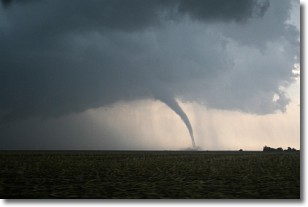
A wall cloud forms underneath the base of a cumulonimbus cloud,
and can be a hotbed for deadly tornadoes.
Wall clouds are formed by air flowing into the cumulonimbus clouds, which can
result in the wall cloud descending from the base of the cumulonimbus cloud, or
rising fractus clouds which join to the base of the storm cloud as the wall cloud
takes shape.
Wall clouds can be very large, and in the Northern Hemisphere they generally
form at the southern edge of cumulonimbus clouds.
Next Topic: Altocumulus Clouds
Weather Topic: What are Altostratus Clouds?
Home - Education - Cloud Types - Altostratus Clouds
 Next Topic: Cirrocumulus Clouds
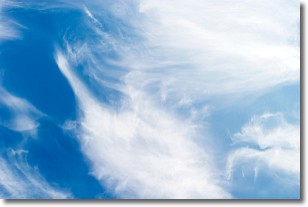
Altostratus clouds form at mid to high-level altitudes
(between 2 and 7 km) and are created by a warm, stable air mass which causes
water vapor
to condense as it rise through the atmosphere. Usually altostratus clouds are
featureless sheets characterized by a uniform color.
In some cases, wind punching through the cloud formation may give it a waved
appearance, called altostratus undulatus. Altostratus clouds
are commonly seen with other cloud formations accompanying them.
Next Topic: Cirrocumulus Clouds
Current conditions powered by WeatherAPI.com