Weather Alerts for Montana
1. Avalanche Warning for: Absaroka/Beartooth Mountains
2. Avalanche Warning for: Bitterroot/Sapphire Mountains; Potomac/Seeley Lake Region
3. Avalanche Warning for: Kootenai/Cabinet Region; West Glacier Region
4. High Wind Warning for: Cascade County below 5000ft; Judith Basin County and Judith Gap; Upper Blackfoot and MacDonald Pass; Gates of the Mountains; Little Belt and Highwood Mountains; Helena Valley; Big Belt, Bridger and Castle Mountains
5. High Wind Warning for: East Glacier Park Region; Northern High Plains; Southern Rocky Mountain Front; Southern High Plains
6. High Wind Warning for: Eastern Glacier, Western Toole, and Central Pondera
7. High Wind Warning for: Meagher County Valleys; Elkhorn and Boulder Mountains; Canyon Ferry Area; Missouri Headwaters; Madison River Valley; Gallatin Valley; Beaverhead and Western Madison below 6000ft
8. High Wind Warning for: Northern Stillwater; Golden Valley; Judith Gap; Northern Sweet Grass; Melville Foothills; Southern Wheatland
9. High Wind Watch for: Cascade County below 5000ft; Judith Basin County and Judith Gap; Upper Blackfoot and MacDonald Pass; Gates of the Mountains; Little Belt and Highwood Mountains; Helena Valley; Big Belt, Bridger and Castle Mountains
10. High Wind Watch for: Central and Southeast Phillips; Northern Phillips; Southwest Phillips
11. High Wind Watch for: East Glacier Park Region; Northern High Plains; Southern Rocky Mountain Front; Southern High Plains
12. High Wind Watch for: Eastern Glacier, Western Toole, and Central Pondera
13. High Wind Watch for: Eastern Toole and Liberty; Hill County
14. High Wind Watch for: Northern Blaine County; Western and Central Chouteau County; Bears Paw Mountains and Southern Blaine
15. Wind Advisory for: Livingston Area; Beartooth Foothills
16. Winter Storm Warning for: Absaroka/Beartooth Mountains
17. Winter Storm Warning for: Crazy Mountains
18. Winter Weather Advisory for: Butte/Blackfoot Region
19. Winter Weather Advisory for: Pryor/Northern Bighorn Mountains; Northeast Bighorn Mountains
20. Winter Weather Advisory for: Southern Rocky Mountain Front; Upper Blackfoot and MacDonald Pass; Elkhorn and Boulder Mountains
Want more detail? Get the Complete 7 Day and Night Detailed Forecast!
Current U.S. National Radar--Current
The Current National Weather Radar is shown below with a UTC Time (subtract 5 hours from UTC to get Eastern Time).

National Weather Forecast--Current
The Current National Weather Forecast and National Weather Map are shown below.

National Weather Forecast for Tomorrow
Tomorrow National Weather Forecast and Tomorrow National Weather Map are show below.

North America Water Vapor (Moisture)
This map shows recent moisture content over North America. Bright and colored areas show high moisture (ie, clouds); brown indicates very little moisture present; black indicates no moisture.

Weather Topic: What are Contrails?
Home - Education - Cloud Types - Contrails
 Next Topic: Cumulonimbus Clouds
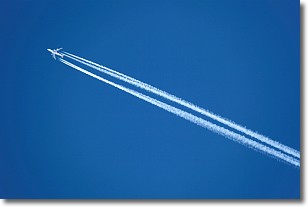
A contrail is an artificial cloud, created by the passing of an
aircraft.
Contrails form because water vapor in the exhaust of aircraft engines is suspended
in the air under certain temperatures and humidity conditions. These contrails
are called exhaust contrails.
Another type of contrail can form due to a temporary reduction in air pressure
moving over the plane's surface, causing condensation.
These are called aerodynamic contrails.
When you can see your breath on a cold day, it is also because of condensation.
The reason contrails last longer than the condensation from your breath is
because the water in contrails freezes into ice particles.
Next Topic: Cumulonimbus Clouds
Weather Topic: What are Cumulus Clouds?
Home - Education - Cloud Types - Cumulus Clouds
 Next Topic: Drizzle
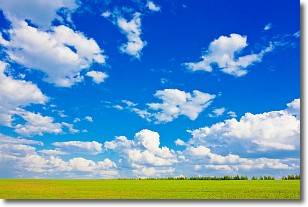
Cumulus clouds are fluffy and textured with rounded tops, and
may have flat bottoms. The border of a cumulus cloud
is clearly defined, and can have the appearance of cotton or cauliflower.
Cumulus clouds form at low altitudes (rarely above 2 km) but can grow very tall,
becoming cumulus congestus and possibly the even taller cumulonimbus clouds.
When cumulus clouds become taller, they have a greater chance of producing precipitation.
Next Topic: Drizzle
Current conditions powered by WeatherAPI.com